Split it any way
Equal parts, exact amounts, percentages or shares, with a warning showing how much is left to assign.
Client project · Native Android
An Android app to split expenses with friends and pool money for group purchases. It was a client’s idea; the project was cancelled with the app nearly finished, and the code and the working app are now for sale.
Splitting the cost of a trip, a shared flat or a birthday always ends in a spreadsheet or in “how much do I owe you?” messages. The client wanted something anyone could use in seconds, with no account and no internet, that also solved a second problem: getting people together to share the cost of a concert table or a family subscription, and knowing who has already paid.
A native Kotlin app with Jetpack Compose, offline-first: everything is stored on the phone and works without an account. With an optional Google account, groups are backed up and shared through a dedicated API, and whatever was created without an account is uploaded later without changing its ids. Balances are computed on the phone with the same formula as the server, money is always handled in cents, and green and red always come with text.
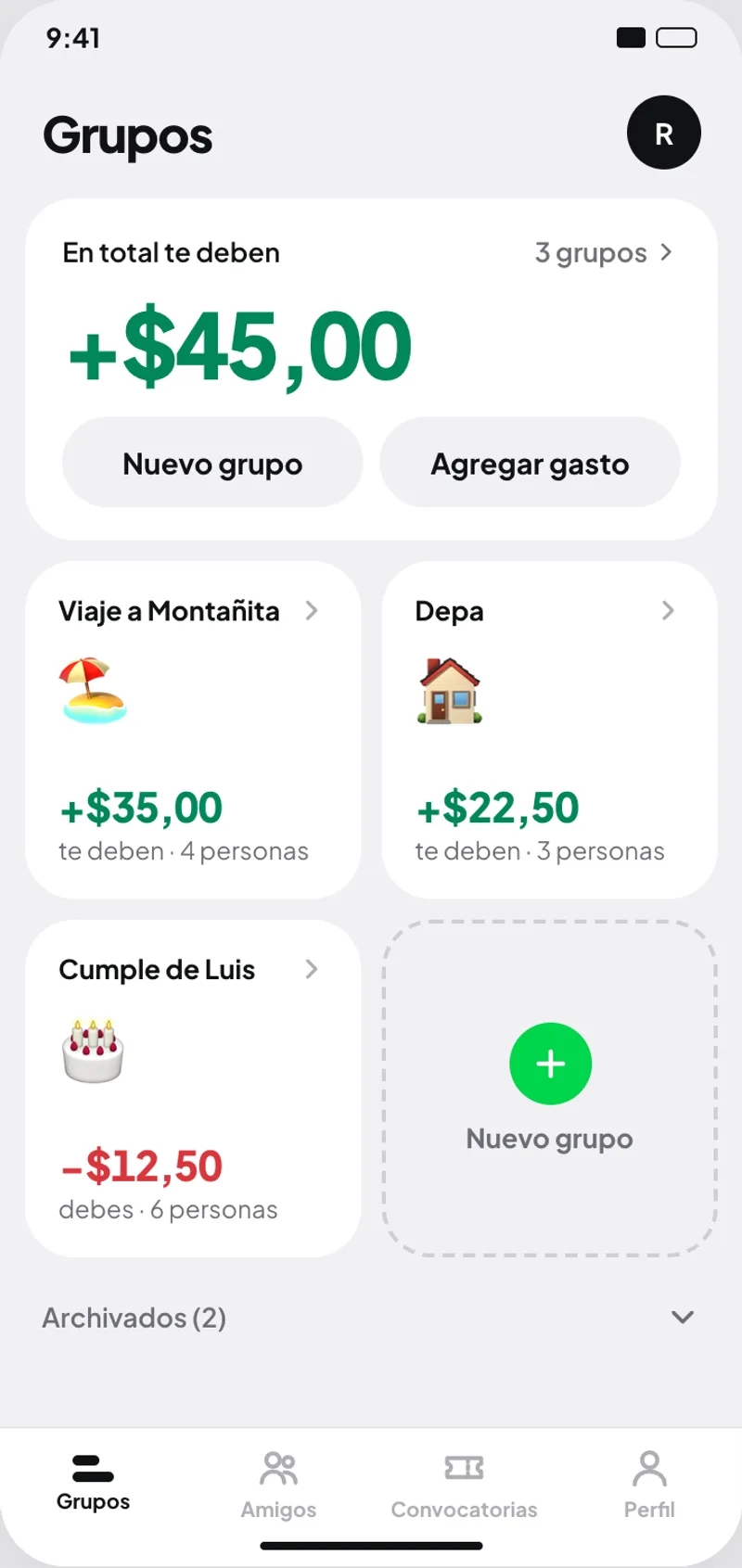
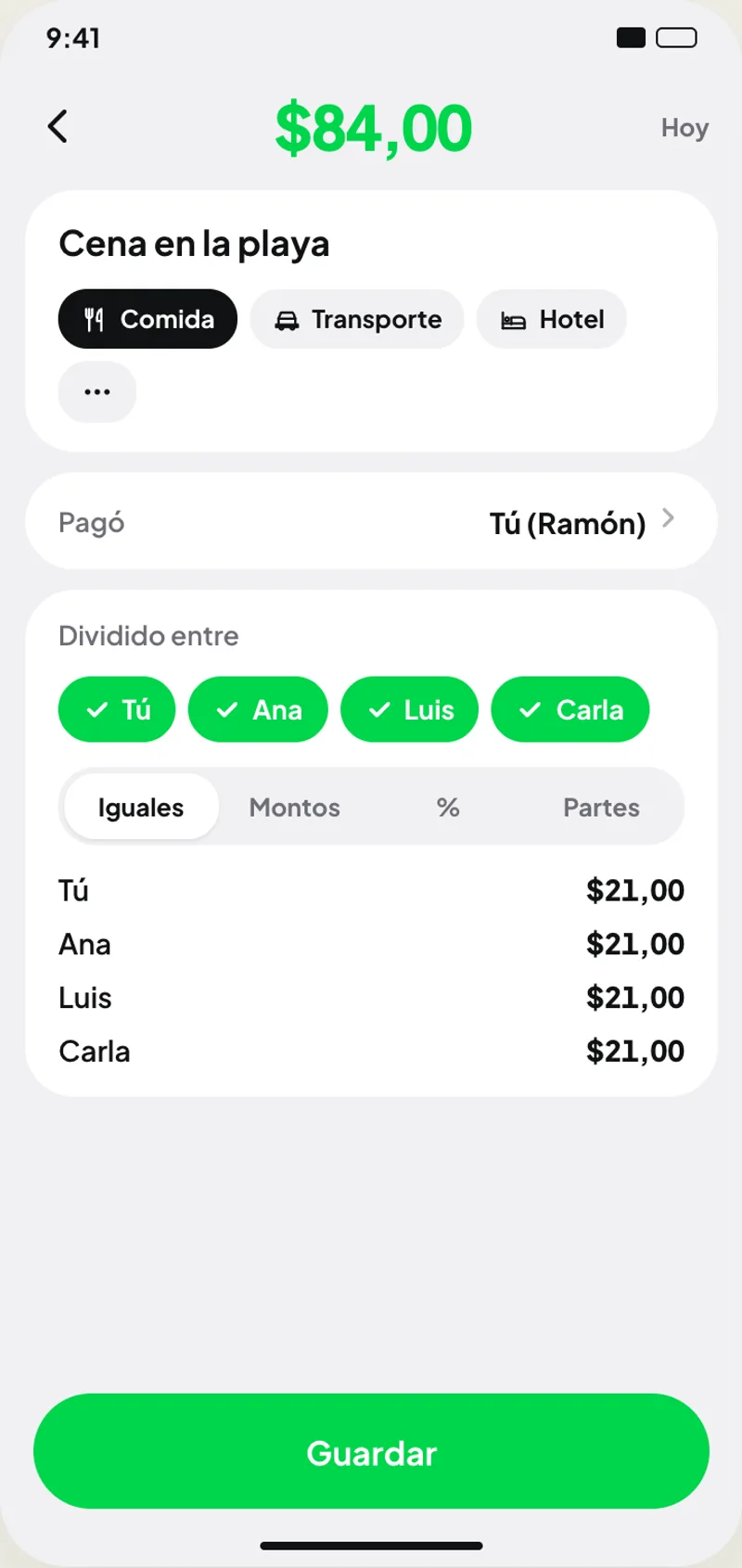
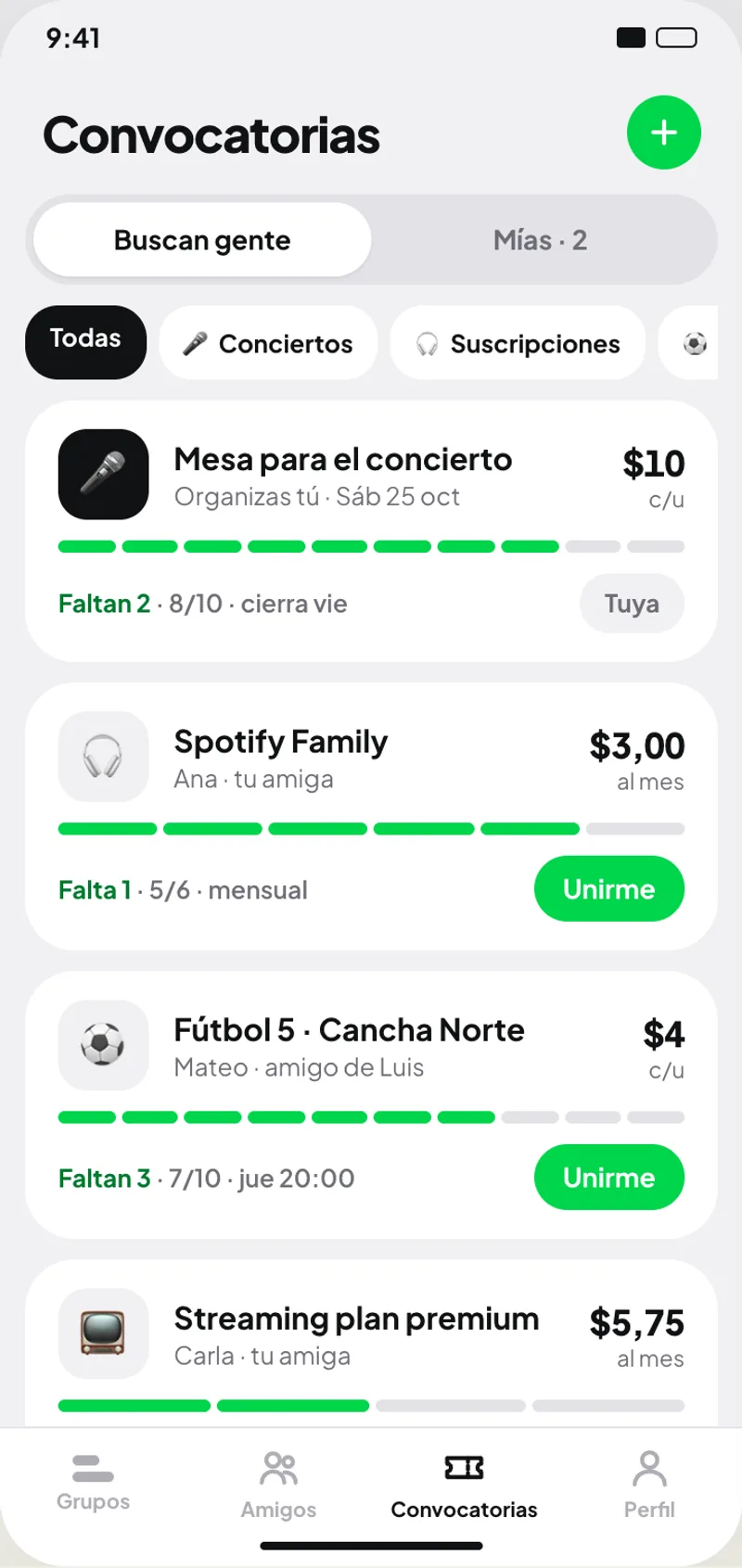
Equal parts, exact amounts, percentages or shares, with a warning showing how much is left to assign.
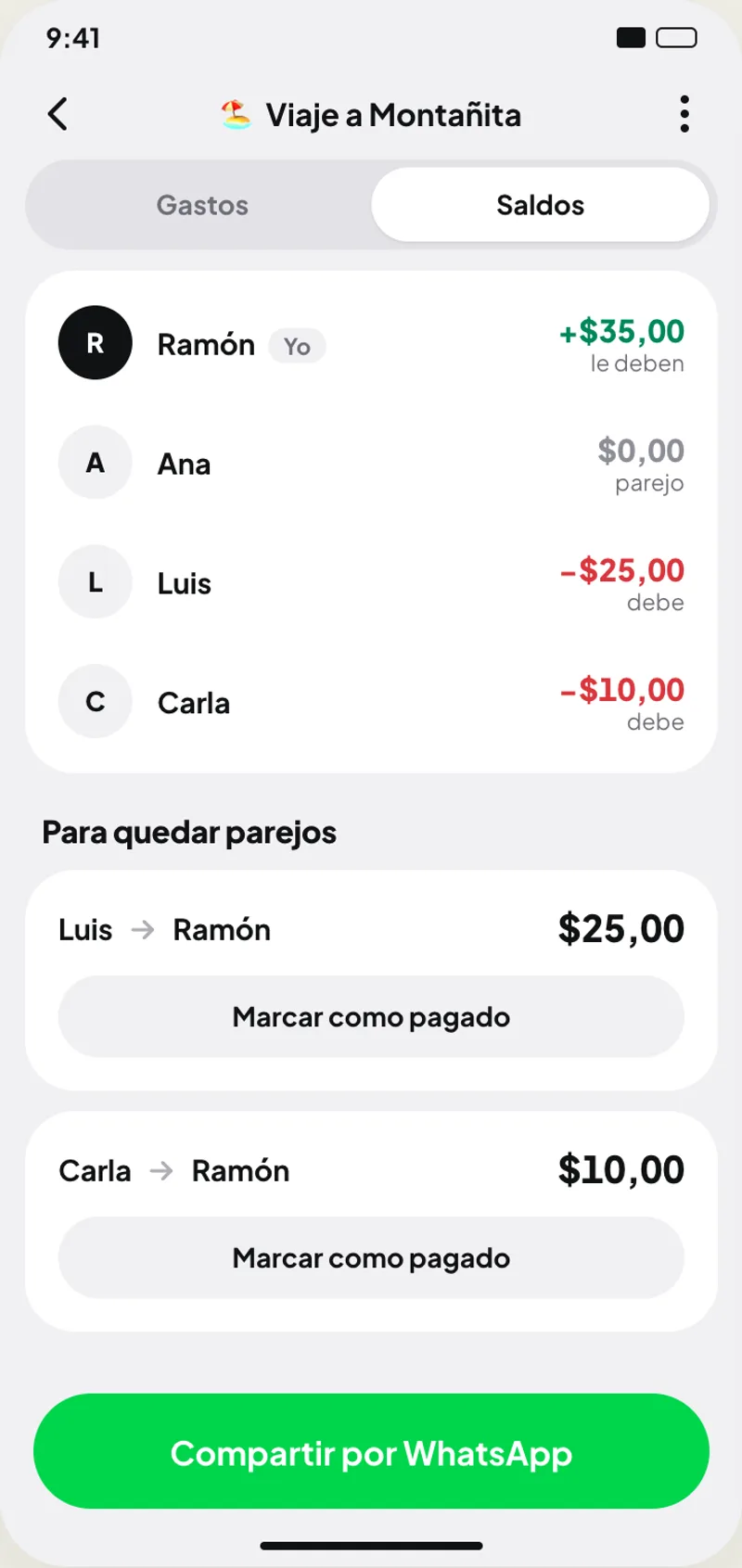
Balances per group and overall, and the fewest transfers needed to settle every debt.
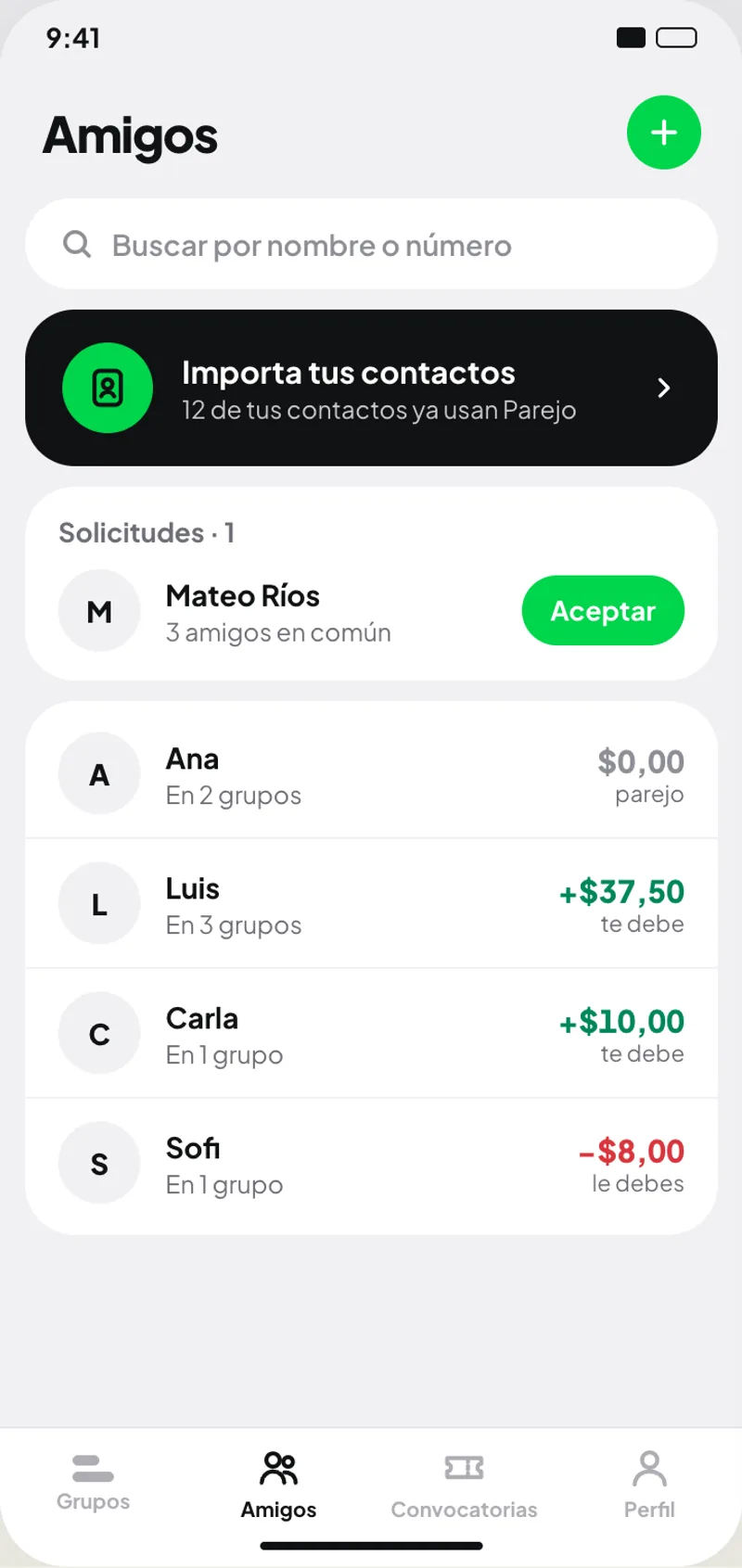
Invites by link or QR code, friends by phone number or from contacts, and background sync.
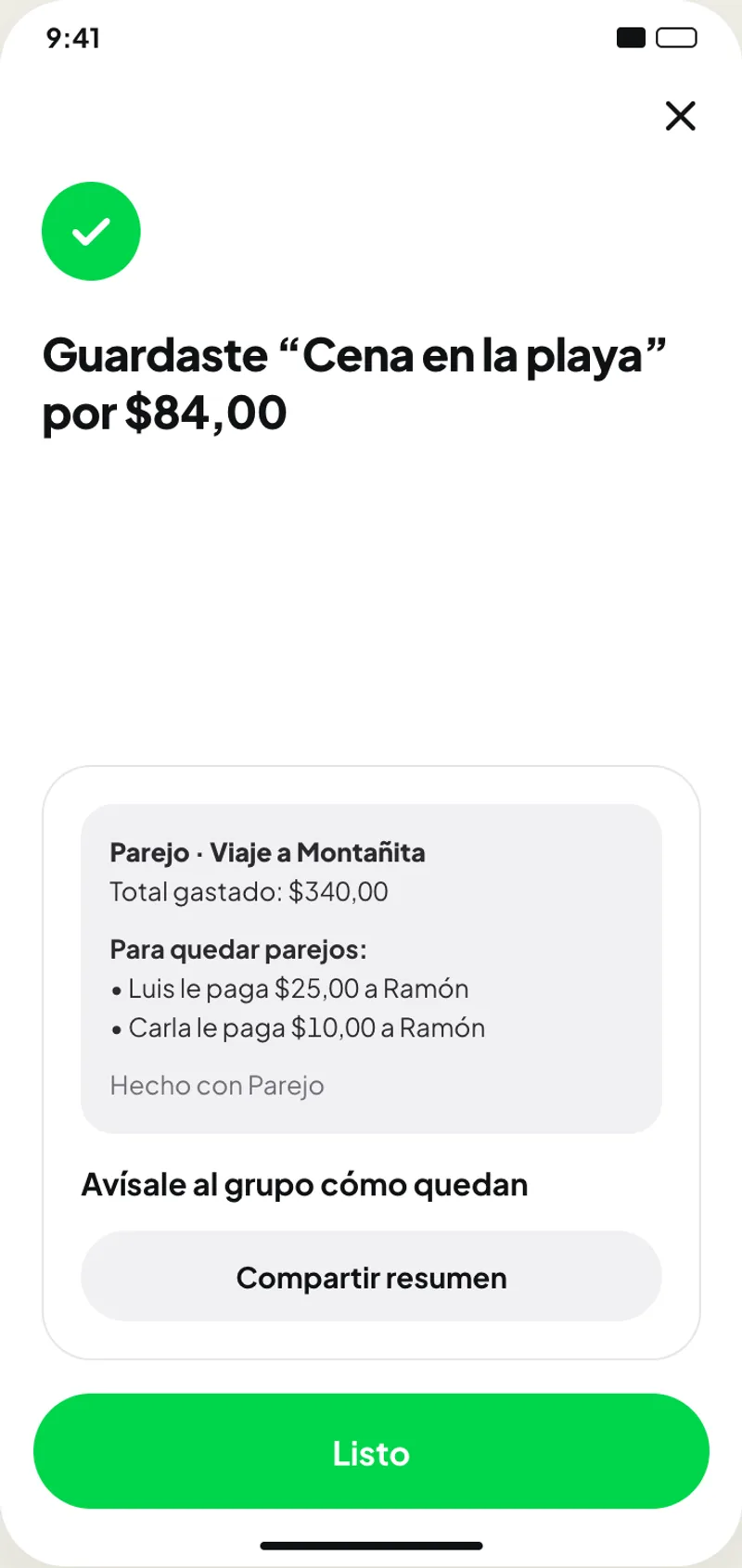
The group total and who pays whom, or a reminder to a friend, ready to send.
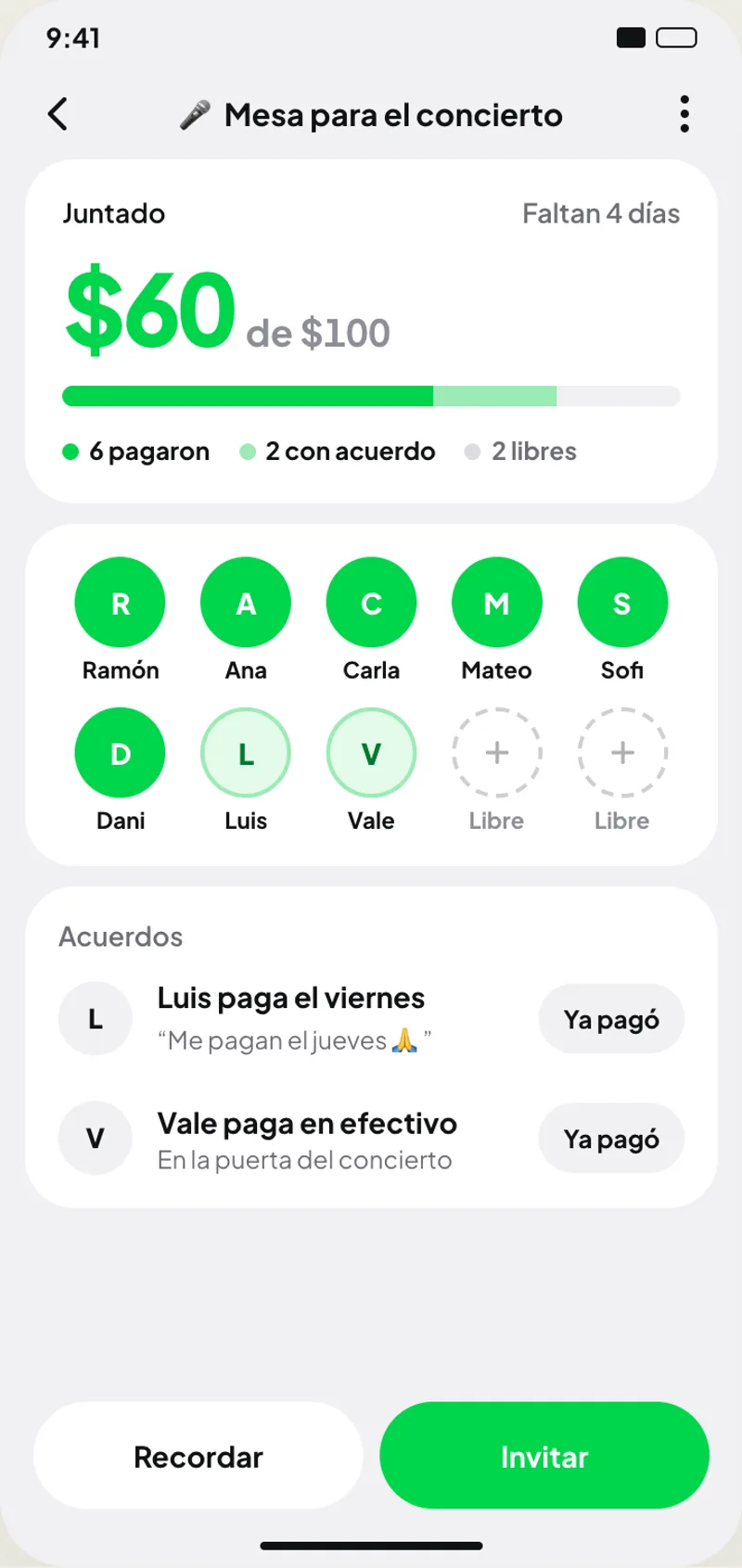
Gather people for a shared purchase or a monthly subscription: slots, payment receipts and requests for free slots.
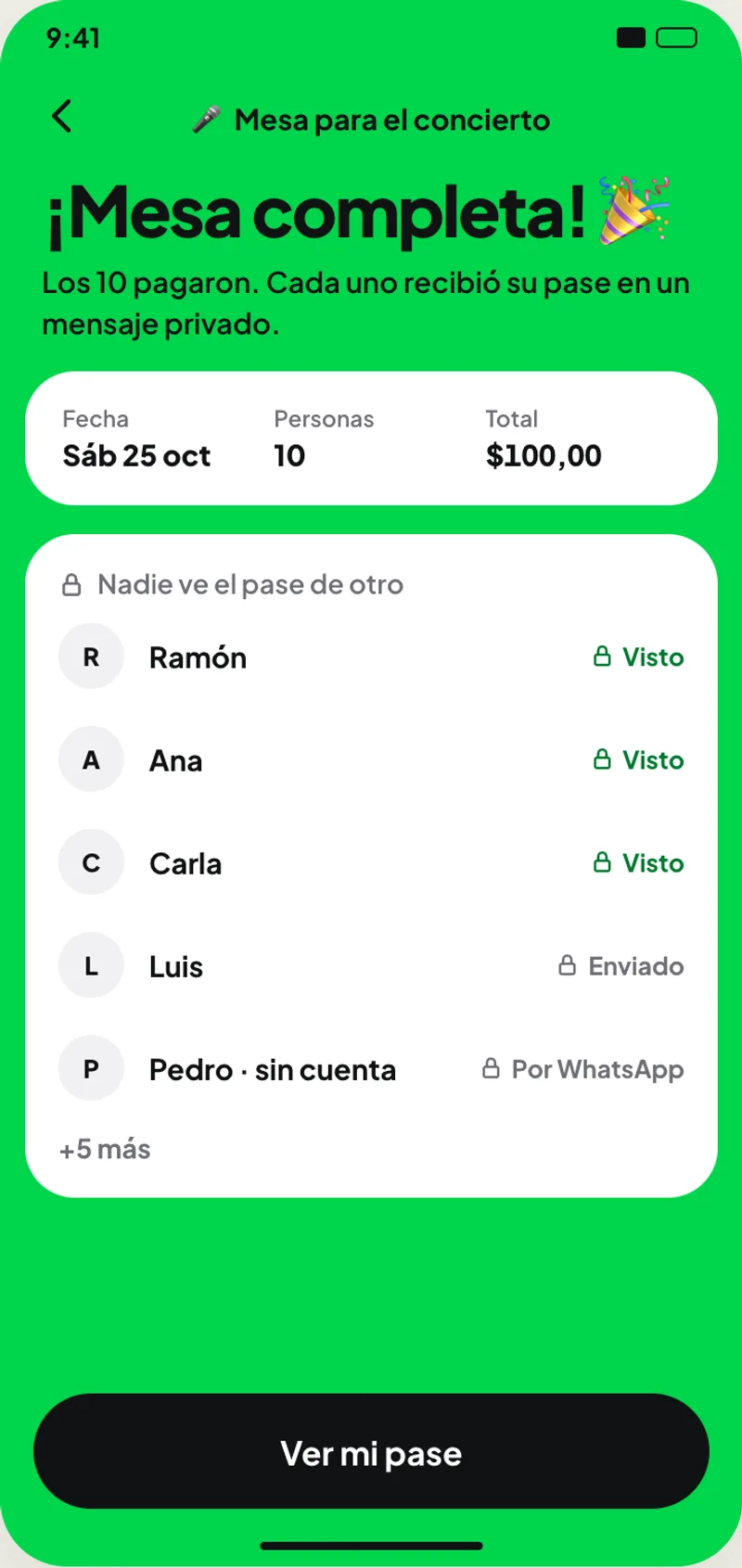
When the table is full, everyone gets a private pass and the organizer checks them at the door.
A Kotlin Android app with Jetpack Compose and Material 3, organized by feature: ViewModels with StateFlow and unidirectional UI, Hilt, Room as the local source of truth, DataStore, WorkManager for sync, Retrofit with kotlinx.serialization, Credential Manager for Google sign-in, Coil for receipt photos and ZXing with Google’s code scanner for QR codes. The API is Node with TypeScript and Fastify, Drizzle ORM on PostgreSQL, pg-boss for background jobs and OpenAPI docs, deployed to Railway with staging and production environments. Unit tests, UI tests and ktlint on every change.
The client cancelled the project with the app working end to end and ready for Google Play. If the idea interests you, I sell the app and API code and the working app, so you can launch it under your own brand.
Write to me to buy ParejoNot every engagement needs someone to take the whole product. Sometimes you already have a team and need someone who has shipped this before to look at it. A decision nobody can settle, a stack under evaluation, a roadmap that feels wrong, an estimate you do not trust. A decade of shipping across web, mobile and AI left me something more useful than a stack: judgment about what is worth building.
